
Learn the secrets of scientific hydration for durable and safe running in hot weather. This guide provides detailed information on necessary water intake before, during, and after training sessions.
According to scientific studies, losing just about 2% of your body’s water (compared to total body weight) can significantly reduce running performance and increase the risk of serious health problems. During a summer run, the body can lose from 0.5 to over 2 liters of sweat per hour. Therefore, maintaining sufficient hydration is a key factor for ensuring safety and effectiveness during training, especially when facing hot weather.
The Vital Role of Water for a Runner’s Body
Water does more than just quench thirst. For runners, water participates in many crucial physiological processes that help maintain performance and protect health:
- Regulates Body Temperature: Water helps cool the body by producing sweat, preventing overheating.
- Lubricates Joints: Reduces friction and protects joints during continuous movement.
- Supports Muscle and Circulatory System Function: Ensures muscles work efficiently and blood circulates well to transport oxygen and nutrients.
- Optimizes Overall Bodily Functions: Helps body organs coordinate smoothly, maintaining alertness and concentration.
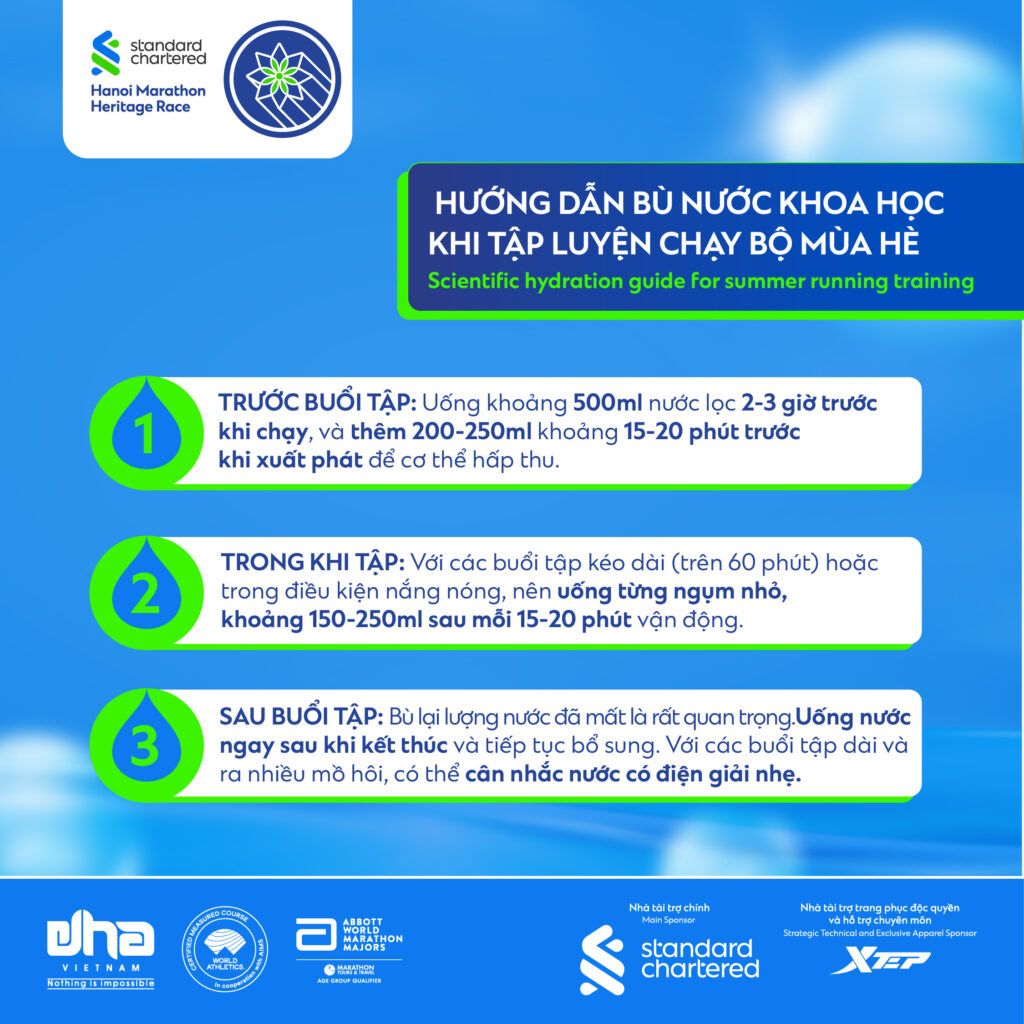
Golden Principles for Effective Hydration During Training
(Important Note: This guide does not apply to official race days)
Proper hydration needs to be approached scientifically and systematically. Here are the fundamental principles you should master for your regular training sessions:
1. Before Training: Preparing the Body’s Water Foundation
- Drink about 500ml of plain water 2 to 3 hours before starting your run.
- Add another 200-250ml of water 15 to 20 minutes right before you set off. This allows your body enough time to absorb it and prepare for the upcoming exercise intensity.
2. During Training: Maintaining Continuous and Regular Hydration
- For extended training sessions (usually over 60 minutes) or when training in severe hot conditions, hydrating during the run is essential.
- You should take small, regular sips of about 150-250ml of water every 15-20 minutes of exercise. Avoid drinking too much at once, as it can cause discomfort or a side stitch.
3. After Training: Replenishing Lost Water and Electrolytes
- Replenishing the water lost through sweat is an extremely important step for body recovery. Drink water immediately after you finish your workout and continue to rehydrate in the following hours.
- For long, high-intensity workouts with significant sweat loss, you might consider drinks with added electrolytes to replace important lost minerals.
Listen to Your Body: The Key to Smart and Effective Hydration
Everyone’s water needs differ depending on their physical condition, training intensity, and environmental conditions. Therefore, the most important thing is to learn to listen to your body’s signals, such as thirst, urine color, or early symptoms of dehydration. Being proactive and conscious about hydration will not only help you train more effectively but also provide a solid foundation for conquering all your goals, including major challenges like the Standard Chartered Hanoi Marathon Heritage Race.